
Quick Answer: Maintaining an e-commerce website requires regular attention to performance, product pages, checkout functionality, security, mobile usability, databases, and third-party integrations. Consistent E-commerce Website Maintenance helps keep an online store fast, reliable, functional, and convenient for customers.
Regular maintenance also helps businesses identify technical issues before they affect sales. From checking broken product links to monitoring checkout processes and updating website software, ongoing maintenance supports a smoother shopping experience and better website performance.
Why Is E-commerce Website Maintenance Important?
An e-commerce website is more than an online information platform because customers use it to search for products, compare options, add items to their carts, make payments, and track orders. Even a small technical problem can interrupt this journey and potentially result in abandoned carts or lost sales.
Regular maintenance keeps the different components of an online store working together properly. Product databases, payment gateways, shopping carts, plugins, themes, APIs, hosting environments, and website code may all require periodic updates or testing. Without maintenance, these elements can gradually develop compatibility or performance issues.
Website maintenance is also important because e-commerce websites often change frequently. Businesses add new products, remove discontinued items, update prices, change offers, publish new content, and modify categories. These continuous changes make regular technical monitoring particularly important.
Keep Your E-commerce Platform Updated
The e-commerce platform, CMS, plugins, themes, extensions, and supporting software should be kept updated according to the website's requirements. Outdated software can create compatibility problems and may prevent certain website features from working correctly.
However, updates should not simply be applied without checking their potential impact. A professional maintenance process generally involves reviewing updates, taking appropriate backups, applying changes carefully, and testing important website functions afterward.
For online stores using multiple extensions, compatibility is especially important. An update to one component can sometimes affect another component connected to the shopping cart, product catalog, checkout system, or payment process.
Monitor Website Loading Performance
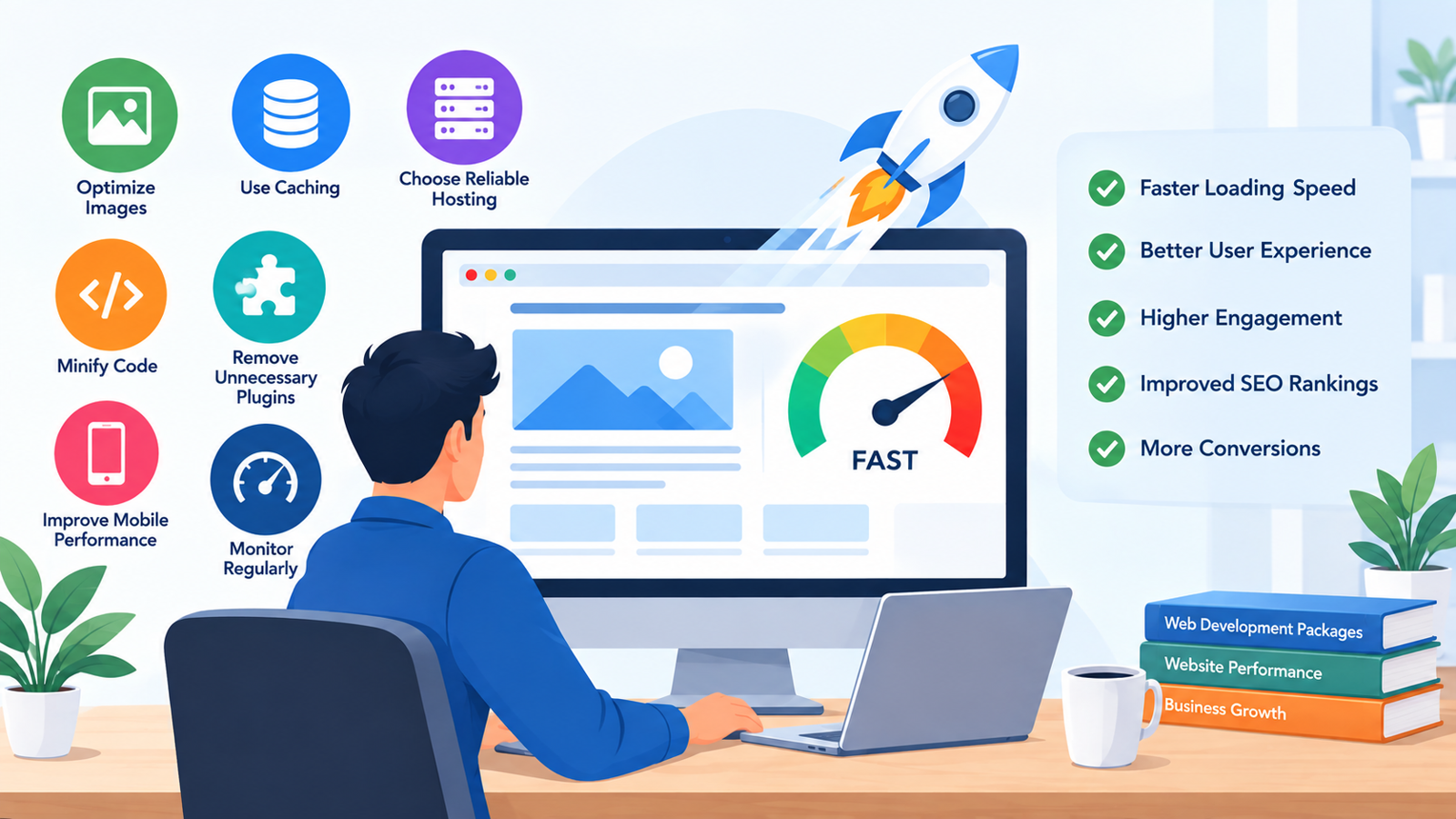
Website performance has a direct relationship with the shopping experience. Customers expect product pages, category pages, images, carts, and checkout screens to load smoothly. When pages become unnecessarily slow, visitors may leave before completing their purchase.
Maintaining an e-commerce website includes regularly reviewing large images, unnecessary scripts, outdated plugins, database performance, caching, server resources, and other technical factors that can affect loading time.
Performance should also be checked across mobile devices because many online shoppers browse and purchase products through smartphones. A website that works well on desktop but performs poorly on mobile can create unnecessary friction during the buying process.
Check Product Pages Regularly
Product pages are among the most important parts of an online store. Maintenance should include checking whether product images load correctly, descriptions display properly, prices are accurate, product variations work, and important purchasing information remains visible.
Businesses should also check product URLs and category structures when products are added, removed, or reorganized. Incorrect links or missing product pages can create a poor customer experience and may also affect search engine visibility.
Instead of deleting important pages without consideration, businesses should determine whether a product is temporarily unavailable, permanently discontinued, or replaced by another product. The appropriate technical treatment can help preserve a better website structure.
Test Shopping Cart and Checkout Functions
A customer may successfully discover a product but still leave the website if the cart or checkout process does not work properly. This makes checkout testing an essential part of e-commerce website maintenance.
Businesses should periodically test adding products to the cart, changing quantities, applying available coupons, entering customer information, selecting shipping options, and proceeding through the checkout process. Payment-related functionality should also be tested appropriately.
Forms, buttons, redirects, confirmation messages, and order notifications should work as expected. Regular testing can help identify problems before customers encounter them during an actual purchase.
Maintain Payment Gateway Integrations
Payment gateways are an important part of an e-commerce website because they connect the online store with payment processing services. Changes to gateway APIs, plugins, authentication requirements, or website configurations can sometimes affect transactions.
Regular maintenance should therefore include checking whether payment integrations remain functional and compatible with the current website environment. Businesses should also monitor failed transactions and unusual checkout errors so technical problems can be investigated quickly.
Third-party integrations should not be ignored simply because they are managed by external providers. Their connection with the website still needs to be monitored as part of an overall E-commerce Website Maintenance process.
Keep the Database Clean and Efficient
E-commerce websites can accumulate a large amount of database information over time, including product records, customer information, orders, sessions, logs, plugin data, and other system-related records. As the website grows, unnecessary database data can contribute to inefficient website operations.
Database maintenance should be performed carefully because important business information must not be removed accidentally. Before making significant database changes, appropriate backups and recovery procedures should be available.
A well-maintained database can support smoother website operations and make it easier for developers or maintenance teams to diagnose technical problems.
Check Website Security Regularly
Online stores handle valuable business and customer information, making security an important part of website maintenance. Security monitoring should include the website platform, plugins, themes, administrator accounts, integrations, SSL configuration, and other relevant technical components.
Regular updates can reduce exposure to known software vulnerabilities, while backups can provide an additional recovery option if a serious technical or security incident occurs.
Security maintenance should be treated as an ongoing process rather than something performed only after a problem occurs. This approach is also connected to the broader Website Maintenance Services discussed in earlier articles in this content cluster.
Fix Broken Links and Technical Errors
Broken links can occur when products are removed, categories are reorganized, pages are moved, or website URLs are changed. On an e-commerce website, broken links can prevent customers from reaching products or useful information.
Regular website checks can identify broken internal links, missing pages, incorrect redirects, and other technical errors. Fixing these issues helps create a smoother navigation experience and supports a healthier website structure.
When URLs genuinely need to change, redirects should be implemented appropriately instead of leaving visitors and search engines with unnecessary dead ends.
Maintain Mobile Shopping Experience
Mobile usability should be included in regular e-commerce website maintenance because customers may interact with online stores through different screen sizes and devices.
Maintenance teams should check whether product images, navigation menus, filters, forms, shopping carts, and checkout elements remain usable on mobile screens. Buttons should be easy to interact with, and important information should not become difficult to access.
Mobile testing should be repeated after significant design, plugin, theme, or functionality updates because a change that appears correct on desktop may create unexpected problems on smaller screens.
Monitor Website Uptime and Hosting
Website availability is essential for an online store because customers cannot purchase products if the website is unavailable. Regular monitoring can help businesses identify downtime, server problems, hosting issues, or unusual availability patterns.
Hosting resources should also be reviewed as the store grows. Increasing product numbers, traffic, database size, or functionality may eventually require better hosting resources or configuration changes.
Domain expiration, SSL certificates, hosting renewals, and related technical services should also be monitored so preventable interruptions do not affect the online store.
Keep Backups and Recovery Procedures Ready
A reliable backup strategy is an important part of maintaining an e-commerce website. Backups can provide a recovery option if website files, databases, configurations, or other important information are accidentally lost or affected by a technical problem.
Businesses should not assume that having a backup means the maintenance process is complete. Backups should be performed consistently and stored appropriately, while recovery procedures should be understood and tested when necessary.
This becomes particularly important for online stores because an e-commerce website may contain product information, customer records, order data, and configuration settings that would be difficult to recreate manually.
How Often Should an E-commerce Website Be Maintained?
The frequency of maintenance depends on the size, complexity, traffic, platform, and update frequency of the online store. High-traffic e-commerce websites with frequent product and order activity generally require more consistent monitoring than small stores with limited activity.
Important functionality such as checkout, payment processing, forms, website availability, and security should be monitored regularly. Software updates, backups, performance checks, content reviews, and technical testing can then be scheduled according to the website's specific requirements.
A structured maintenance schedule can make this process easier to manage and can help businesses avoid waiting until a major problem appears.
Can E-commerce Website Maintenance Improve SEO?
Regular maintenance can indirectly support SEO by helping keep the website accessible, functional, fast, and technically organized. Broken links, missing pages, poor mobile usability, slow performance, and technical errors can create problems for both users and search engines.
Maintenance should therefore work alongside an SEO strategy rather than being treated as a completely separate activity. When product pages, URLs, internal links, metadata, website performance, and technical elements are maintained carefully, the website can provide a stronger foundation for ongoing search visibility.
Businesses should also avoid making unnecessary URL or structural changes during routine maintenance because poorly managed changes can create avoidable SEO problems.
When Should an E-commerce Website Be Redesigned?
Regular maintenance can solve many technical and performance issues, but it cannot always address deeper structural problems. If an online store has an outdated architecture, poor user experience, limited scalability, or major functionality limitations, a redesign or redevelopment may eventually become necessary.
Maintenance and redesign are not necessarily alternatives. An e-commerce business may maintain its existing website regularly while planning a larger redesign when the current platform can no longer support its requirements.
The key is to identify whether the problem can be solved through routine maintenance or requires a more substantial technical change.
Conclusion
Maintaining an e-commerce website is an ongoing process that supports website performance, functionality, reliability, and customer experience. Product pages, shopping carts, checkout systems, payment gateways, databases, integrations, security, mobile usability, hosting, and backups all require appropriate attention as an online store grows.
Regular E-commerce Website Maintenance can help businesses identify technical problems before they become major disruptions. It also provides an opportunity to keep the website aligned with changing customer expectations, software requirements, and business needs.
A well-planned maintenance process should be based on the website's platform, size, traffic, functionality, and business goals. Instead of treating maintenance as an occasional technical task, businesses can make it part of their regular website management strategy.
If your online store needs ongoing technical support, performance monitoring, updates, security checks, backups, or functionality maintenance, professional Website Maintenance Services can help keep the website reliable and ready for customers.
Need professional support for your e-commerce website? Contact Us today and get the right Website Maintenance Services for your business.
For businesses looking for professional SEO and digital marketing support, RankON Technologies is an experienced agency offering services such as SEO, Google Ads, social media marketing, website development, and content marketing. You can also explore its TopDevelopers profile to learn more about the company's services and experience.
Frequently Asked Question
How often should an e-commerce website be maintained?
An e-commerce website should be monitored regularly, while specific maintenance tasks can be scheduled weekly, monthly, quarterly, or according to the store's technical requirements. High-traffic stores may require more frequent monitoring.
What does e-commerce website maintenance include?
E-commerce maintenance can include software updates, security monitoring, backups, performance checks, product-page testing, broken-link checks, database maintenance, payment gateway testing, mobile testing, hosting monitoring, and technical troubleshooting.
Can website maintenance improve e-commerce sales?
Maintenance does not guarantee increased sales, but it can help reduce technical problems that interfere with shopping. A reliable website with functional checkout, good performance, accurate product information, and a smooth user experience can support the purchasing process.
Why should payment gateways be tested regularly?
Payment gateway problems can prevent customers from completing transactions. Regular testing helps identify integration or configuration issues that could interfere with successful payments.
Is e-commerce maintenance different from normal website maintenance?
Yes. E-commerce websites generally require additional attention because they involve product catalogs, shopping carts, checkout systems, payment gateways, orders, customer data, and other transactional functionality.
When does an e-commerce website need redesign instead of maintenance?
A redesign may be considered when the existing website has deeper structural, usability, scalability, or functionality limitations that routine maintenance cannot reasonably solve.






Write a comment ...