
Quick Answer: An SEO-friendly website has a clear structure, mobile-responsive design, fast loading speed, optimized content, clean URLs, proper headings, optimized images, internal links, and accessible technical elements. These features help search engines understand a website while providing visitors with a better browsing experience.
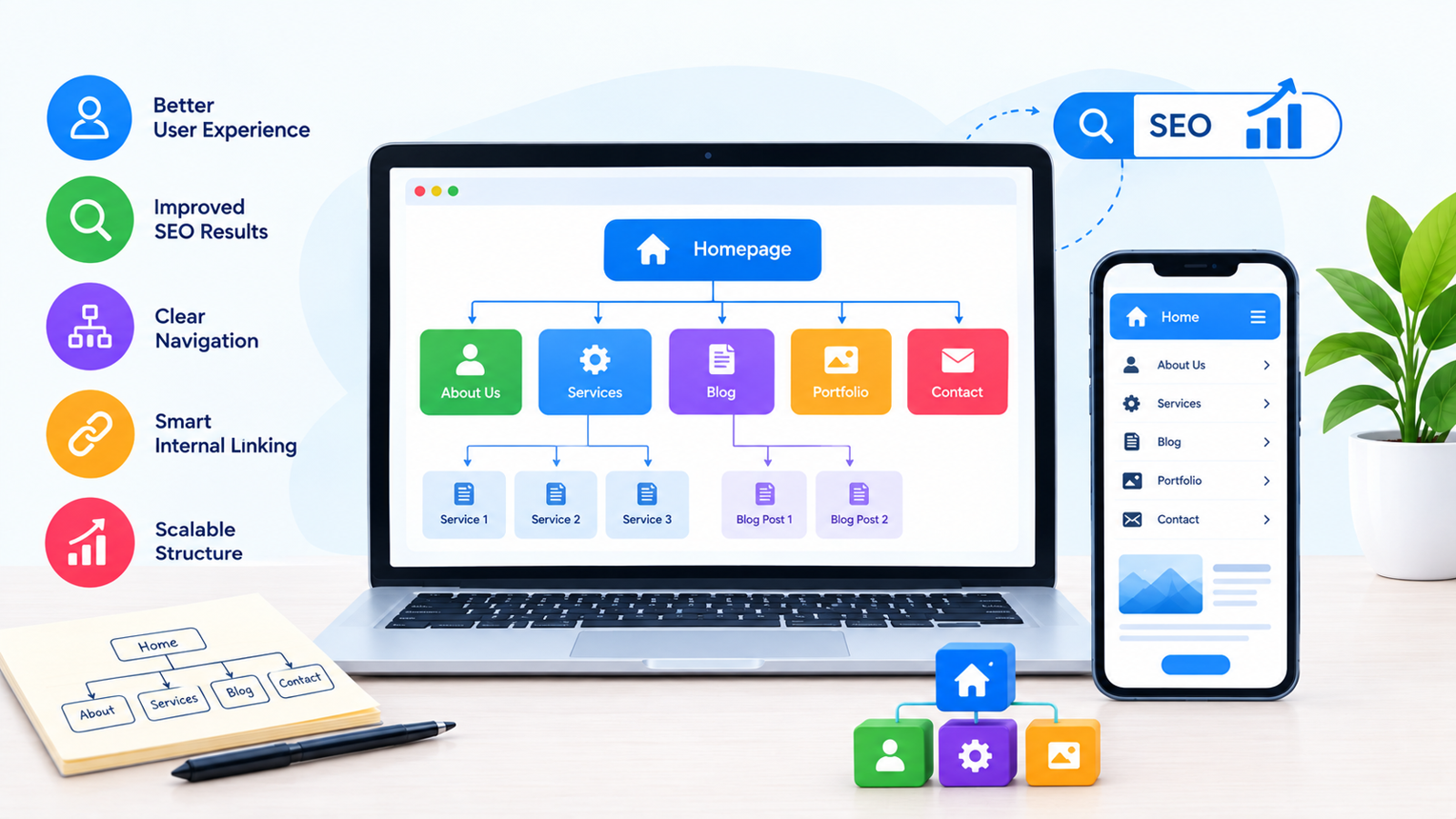
1. Clear and Logical Website Structure
A clear website structure helps both users and search engines navigate the website.
Important pages should be organized logically, with related services, products, categories, and information grouped appropriately.
For example, a service business may organize its website as:
Home → Services → Individual Service Pages → Contact
A logical structure makes important pages easier to discover and can also support effective internal linking.
2. SEO-Friendly URLs
URLs should be simple, descriptive, and relevant to the page.
For example, a URL describing a specific service is generally easier to understand than one containing a long string of random characters.
Businesses should avoid unnecessarily complicated URLs and use consistent URL structures throughout the website.
If an existing website changes its URLs, appropriate redirects should also be planned to reduce the risk of broken links and unnecessary SEO issues.
3. Mobile-Friendly Design
Mobile responsiveness is an essential part of modern website development.
Visitors may access a business website from smartphones, tablets, laptops, and desktop computers. The website should therefore adapt properly to different screen sizes.
Important elements such as navigation menus, buttons, forms, images, and content should remain easy to use on smaller screens.
A mobile-friendly website also provides a better experience for visitors accessing the website through mobile devices.
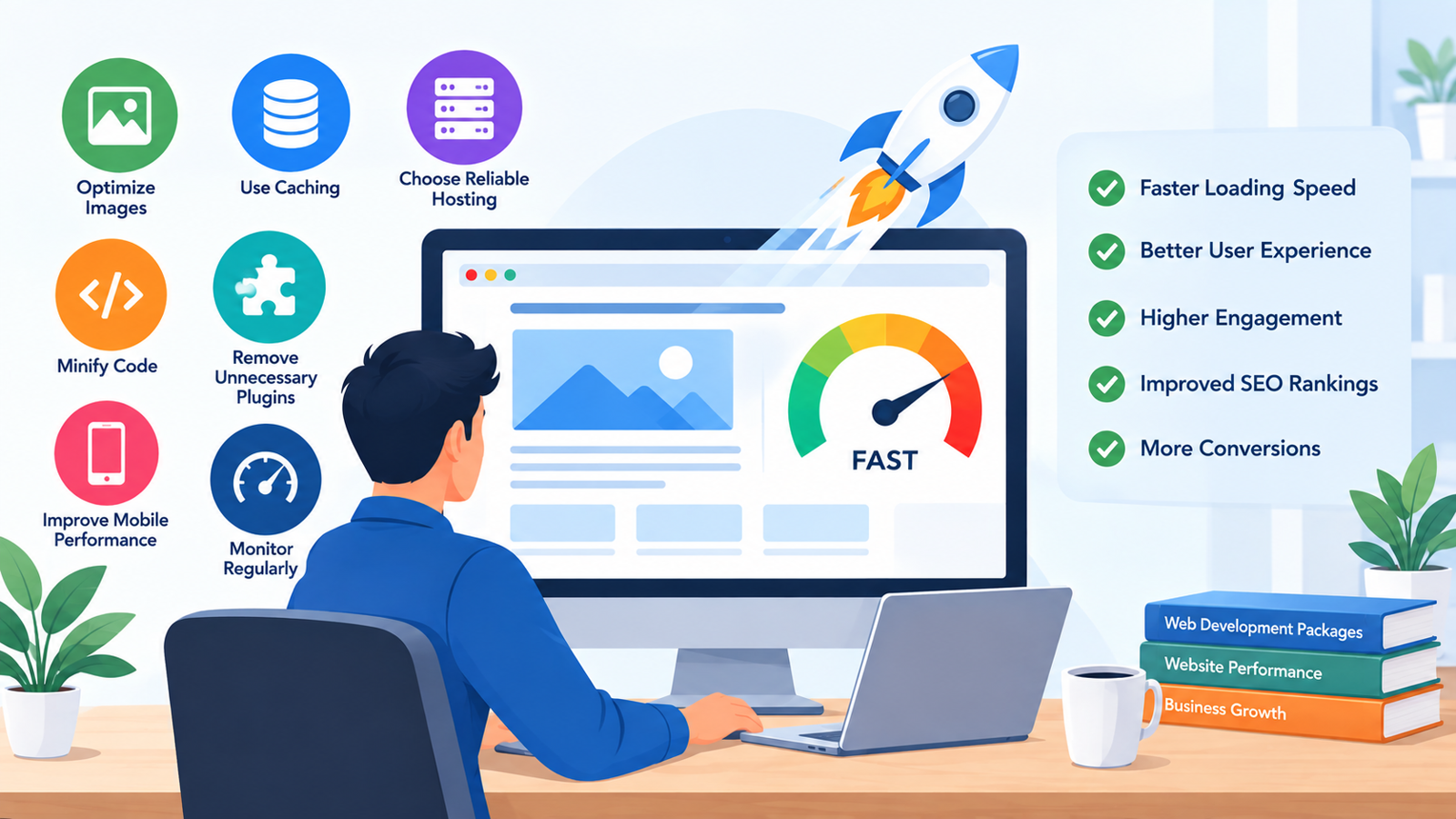
4. Fast Website Loading Speed
Website performance is another important consideration when creating an SEO-friendly website.
Large images, excessive scripts, unnecessary plugins, poor hosting, and inefficient code can affect loading performance.
Businesses can improve performance by:
Optimizing images
Using suitable caching
Choosing reliable hosting
Reducing unnecessary scripts
Removing unused plugins
Optimizing website resources
Monitoring performance regularly
Speed optimization should be considered during development and continued as part of website maintenance.
5. Proper Heading Structure
Headings help organize website content into understandable sections.
A page should have a clear main heading, followed by relevant subheadings where appropriate.
For example:
Main Topic
→ Main Section
→ Subsection
→ Supporting Information
Headings should describe the content that follows rather than being used simply for visual styling.
A logical heading structure can make long pages easier for visitors to scan and understand.
6. High-Quality and Relevant Content
Technical optimization alone cannot make a website useful to customers.
An SEO-friendly website should provide original, relevant, and helpful content that addresses the needs and questions of its target audience.
Business websites should clearly explain their services, products, benefits, processes, and other information visitors may need before making a decision.
Keywords should be incorporated naturally rather than repeatedly inserted into content.
For example, if the target topic is what makes a website SEO-friendly, the phrase can be used naturally in the introduction, relevant headings, and supporting content without excessive repetition.
7. Optimized Images
Images can improve a website's visual appeal, but they can also affect performance if they are not optimized.
Businesses should use appropriately sized images and compress them where necessary.
Important image practices include:
Using suitable image formats
Reducing unnecessary file sizes
Using descriptive file names
Adding appropriate alternative text
Avoiding unnecessarily large images
Image optimization can support both website performance and accessibility.
8. Internal Linking
Internal links connect pages within the same website.
For example, a blog discussing website development costs can naturally link to a relevant page about Web Development Packages.
Internal linking can help visitors discover related information and can also help search engines understand relationships between pages.
Businesses should use descriptive and relevant anchor text while avoiding excessive or unnatural linking.
9. Crawlable Website Architecture
Search engines need to be able to access and understand important website pages.
A well-planned website architecture can make crawling more efficient.
Businesses should pay attention to elements such as navigation, internal links, XML sitemaps, robots directives, redirects, and indexability settings.
Important pages should not accidentally be blocked from search engine crawlers.
Technical SEO requirements can vary depending on the website's technology and structure, so these settings should be reviewed carefully during development.
10. Secure Website With HTTPS
Website security is important for both users and businesses.
HTTPS helps protect information exchanged between the visitor's browser and the website.
A valid SSL/TLS setup is particularly important for websites that handle contact information, account credentials, payments, or other sensitive data.
Security should be considered during website development rather than added as an afterthought.
11. SEO-Friendly Metadata
Important pages should have appropriate title tags and meta descriptions.
These elements help describe page content and can influence how pages are presented in search results.
Each important page should have relevant and descriptive metadata rather than using identical titles and descriptions across the entire website.
For example, a service page should have metadata that reflects that specific service rather than simply repeating the website's homepage information.
12. Easy Navigation and Good User Experience
SEO-friendly development should also consider the people using the website.
Visitors should be able to quickly understand what the business offers and find important information without unnecessary effort.
Clear menus, logical page layouts, readable content, visible calls to action, and accessible contact options can improve the overall experience.
A website designed only for search engines can still fail if visitors find it confusing or difficult to use.
Additional Technical Elements for an SEO-Friendly Website
Depending on the website, additional technical considerations may include:
XML sitemap
Robots.txt configuration
Canonical URLs
Structured data
Proper redirects
404 error handling
Image alt attributes
Breadcrumb navigation
Mobile optimization
Core performance metrics
Indexability controls
Not every website requires the same technical setup. The appropriate configuration depends on the site's size, platform, content, and business objectives.
How Website Development Packages Can Support SEO
When comparing Web Development Packages, businesses should look beyond visual design and page count.
Important questions include:
Is the website mobile responsive?
Is the website structured for search engines?
Are clean URLs supported?
Is page speed considered?
Can page titles and descriptions be edited?
Is a CMS included?
Can new pages and blog posts be added?
Is image optimization supported?
Are redirects manageable?
Is the website scalable for future SEO work?
A development package that provides a flexible technical foundation can make ongoing SEO activities easier.
However, website development alone does not guarantee search rankings. SEO generally requires ongoing content optimization, technical improvements, authority building, monitoring, and other activities depending on the competition and industry.
Common SEO-Friendly Website Mistakes
Businesses can make several mistakes while developing their websites.
One common problem is designing the website entirely around appearance without considering structure, performance, mobile usability, or search accessibility.
Another is creating duplicate page titles, complicated URLs, oversized images, or pages with very little useful content.
Some businesses also launch websites without checking whether important pages can be crawled and indexed.
Finally, SEO is sometimes treated as a one-time task. Website content, technology, competitors, and search requirements can change, so ongoing monitoring is important.
SEO-Friendly Website Checklist
Before launching a business website, review the following:
Clear website structure
Descriptive URLs
Mobile-responsive design
Fast loading pages
Proper heading structure
Useful and relevant content
Optimized images
Internal linking
Crawlable pages
HTTPS security
Unique page titles
Relevant meta descriptions
XML sitemap where appropriate
Proper redirects
Good navigation
Ongoing performance monitoring
This checklist can help businesses identify common areas that need attention before launch.
Conclusion
So, what makes a website SEO-friendly? A combination of technical structure, useful content, mobile responsiveness, website speed, clear navigation, optimized URLs, internal linking, secure connections, and other SEO-friendly elements.
Businesses should consider these requirements from the beginning rather than trying to fix every technical issue after the website has been developed.
When selecting Web Development Packages, look for a development approach that provides a flexible, responsive, secure, and technically sound website that can support future SEO activities.
An SEO-friendly website is not a guarantee of higher rankings, but it creates a stronger foundation for search engine optimization and a better experience for visitors.
Planning an SEO-friendly business website? Contact Us with our team to discuss your website development requirements.
For businesses looking for professional SEO and digital marketing support, RankON Technologies is an experienced agency offering services such as SEO, Google Ads, social media marketing, website development, and content marketing. You can also explore its TopDevelopers profile to learn more about the company's services and experience.
Frequently Asked Questions
What makes a website SEO-friendly?
A website can be considered SEO-friendly when it has a logical structure, mobile-responsive design, fast performance, optimized content, clean URLs, proper headings, internal links, and accessible technical elements.
Is website speed important for SEO?
Website performance is an important part of providing a good user experience. Businesses should optimize loading performance alongside other technical and content-related SEO factors.
Does mobile responsiveness help SEO?
A mobile-friendly website helps provide a better experience for visitors using smartphones and other mobile devices. Mobile usability should therefore be an important part of website development.
Should SEO be included during website development?
Yes. Planning SEO-friendly structure, URLs, navigation, responsiveness, performance, and technical settings during development can provide a better foundation for future SEO work.
Can a website rank without SEO?
A website may appear in search results without a dedicated SEO campaign, but visibility depends on many factors. SEO helps businesses improve technical accessibility, content relevance, site structure, and other areas that support search visibility.








Write a comment ...